
Personale docente
Insegnamenti
CELLS, TISSUES, EMBRYOLOGY AND DEVELOPMENT, AA 2025 (SCQ1099294)
FONDAMENTI DI BIOLOGIA, AA 2025 (SC02122859)
CELLS, TISSUES, EMBRYOLOGY AND DEVELOPMENT, AA 2024 (SCQ1099294)
FONDAMENTI DI BIOLOGIA, AA 2024 (SC02122859)
Curriculum
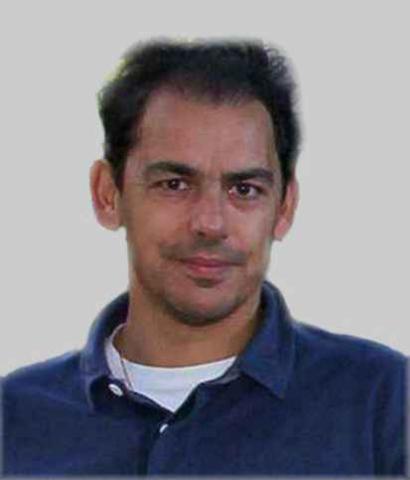
Francesco Argenton,Born, 7-1-1961Abilitazione alla Prima Fascia settore 05/F1 (BIO13), 22 Gennaio 2014, Ministerodell’Università e della Ricerca ScientificaAbilitazione alla Prima Fascia settore 05/B2 (Anatomia Comparata e Citologia), 24 Febbraio2014, Ministero dell’Università e della Ricerca ScientificaEducation/Training:1986 Università degli Studi di Padova- Laurea in Scienze Biologiche with thesis on “Protozoans resistance to heavy metals”1988 Università degli Studi di Padova - Laurea Scienze Naturali with thesis on “Molecular mechanisms regulating cell-cell interactions”1992 Università degli Studi di Padova - PhD in Comparative Endocrinology with thesis on “Transcriptional control of GH gene in teleosts” 1992-1993 The Weizmann Institute of Science, Rehovot, Israel. Post-Doc on “Transcriptional regulation of Insulin gene in teleosts”1993-1998 Università degli Studi di Padova - Post-Doc on “Transcriptional Regulation of GH and Insulin genes”Employments1) Istituto di Semeiotica Medica: Università degli Studi di Padova ITALY. Fellowship From 1-1-82 to 31-12-832) Dipartimento di Biologia, Università degli Studi di Padova ITALY. Ph.D. fellowship (MURST) From 1-10-88 to 30-9-923) Dept. of Biochemistry: The Weizmann Inst. of Science, Rehovot ISRAEL. Post-doc fellowship (EMBL+Weizmann Institute) From 1-9-92 to 7-10-934) Ist. Zooprofilattico delle Venezie, Padova ITALY consultant From 15-2-93 to 31-8-945) Dipartimento di Biologia: Università degli Studi di Padova ITALY. Post-doc fellowship (EU) From 10-9-94 19-7-986) Dipartimento di Biologia: Univ. of Padova ITALY Ricercatore Universitario BIO13 (Applied Biology) From 20-7-98 to 28-2-20067) Dipartimento di Biologia: Università degli Studi di Padova ITALY Associate professor BIO13 (Applied Biology) from 1-3-2007 to 31-3-20168) Dipartimento di Biologia: Università degli Studi di Padova ITALY Full professor BIO13 (Applied Biology) from 1-4-2016 to nowInternational Experience1) From July to August 1991: PhD visiting Student in the Laboratoire de Biologie Moleculaire et Génie Génétique del Professor Josef Martial at l'Institute de Chimie dell'Univérsité de Liège (Belgium).2) From September 1992 to October 1993: Post doc in the laboratory of Prof. Michael Walker, Department of Biochemistry at the Weizmann Institute of Science (Israel).3) From April to May 1994, 1996, 1998: laboratory of Prof. Nisson Schechter, Department of Biochemistry and Cell Biology, State University of New York at Stony Brook (USA).4) July 97: laboratory of Prof. Filip Volckaert, Department of Zoology, University of Leuven (Belgium).5) April 1998: Visiting scientist in the laboratory of Prof. Nisson Schechter, State University of New York at Stony Brook (USA).6) May 2001: Department of Developmental Biology University of Freiburg, Germany7) July and August 2012: Visiting Professor at the University of Oregon at Eugene, Dept. of Neuroscience and Zebrafish International Resource Centre.8) July and August 2013: Visiting Scientist at the Johns Hopkins University School of Medicine.
Pubblicazioni
www.ncbi.nlm.nih.gov/pubmed/?term=argenton-f
Tesi proposte
STAT3 is a gene encoding a nuclear transcription factor controlling stemness, NR3C1 is the gene encoding the Glucocorticoid receptor, a nuclear transcription factor (glucocorticoid is a widely used class of drugs) and Hif1a is the nuclear transcription factor that is responsible for hypoxia response. Data from literature indicate that this three transcription factors have strong interactions in controlling respiration, metabolism and proliferation.
Our laboratory is aimed at:
1) Define the Gene Regulatory Network of STAT3, NR3C1and HIF1a in simple model systems
2) Define the molecular mechanisms coordinating nuclear and mitochondrial expression by STAT3, NR3C1 and HIF1a in simple model systems
3) Define the impact of Hif1a, NR3C1, STAT3 mutations on mitochondria biology
4) Target the mitochondrial functions of STAT3, NR3C1 and HIF1a in regenerating tissues and small cancer models